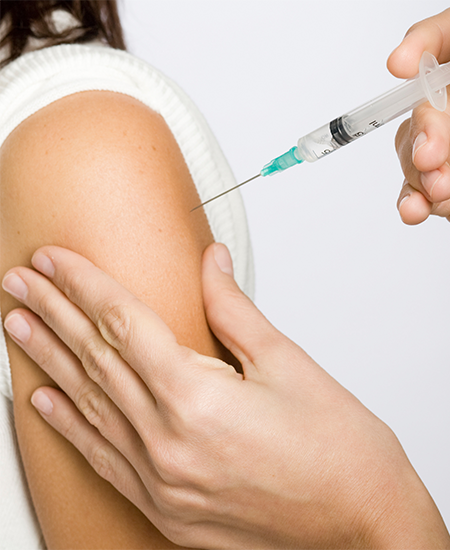
Encephalopathy is a serious neurological condition that is recognized on the Vaccine Injury Table for certain vaccines under the National Vaccine Injury Compensation Program (“VICP”).
Vasovagal syncope—commonly known as fainting—is a condition recognized on the Vaccine Injury Table for several different vaccines. While fainting is often a brief event, it can lead to serious secondary injuries if a person falls or suffers other complications.
Rotavirus vaccines are routinely given in infancy and are covered by the National Vaccine Injury Compensation Program (VICP). One specific condition, intussusception, is expressly recognized on the Vaccine Injury Table for rotavirus vaccines, with specific timing and qualification rules.
In December 2025, the CDC’s Advisory Committee on Immunization Practices (ACIP) voted to change a long-standing recommendation: instead of advising that all newborns receive the hepatitis B vaccine at birth, the committee now recommends the birth dose only for infants whose mothers test positive for hepatitis B or whose status is unknown.
Vitiligo is a condition where the body’s immune system attacks the cells that produce skin pigment, causing patches of lighter skin. It is not contagious and can affect people of any age or background.
Hepatitis B vaccines are an important tool in protecting against Hepatitis B virus, a serious infection that can cause chronic liver disease, cirrhosis, and liver cancer.
Rubella-containing vaccines, such as the MMR (measles, mumps, and rubella) and MMRV (measles, mumps, rubella, and varicella) vaccines, are essential tools in preventing serious infectious diseases.
Tetanus toxoid-containing vaccines—such as DTaP, DTP, DT, Td, and TT—are critical in preventing tetanus and related diseases. While these vaccines are generally safe, the National Vaccine Injury Compensation Program (“VICP”) recognizes certain rare adverse reactions that may qualify for compensation.